


GESUALDO
TENEBRAE

"There is something deeply troubling and inscrutable in Gesualdo’s music, something that any listener will unfailingly experience. This most particularly holds for Tenebrae responsoria (1611), his definitive statement, his monument, his testament. It is as if this work would constantly extend over its boundaries and transgress its time and setting, immediately addressing modernity…”
Mladen Dolar, Out of Joint (2020)
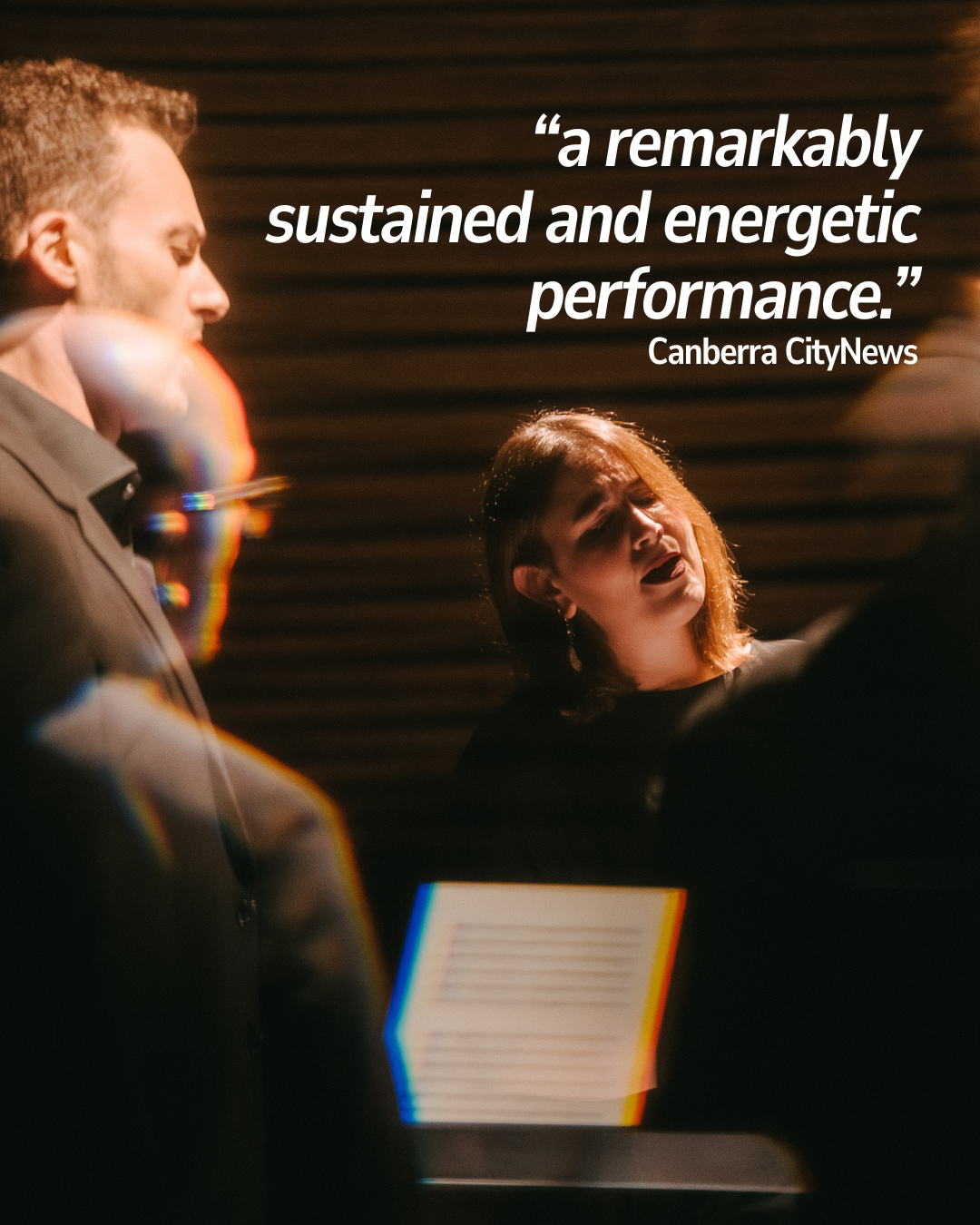
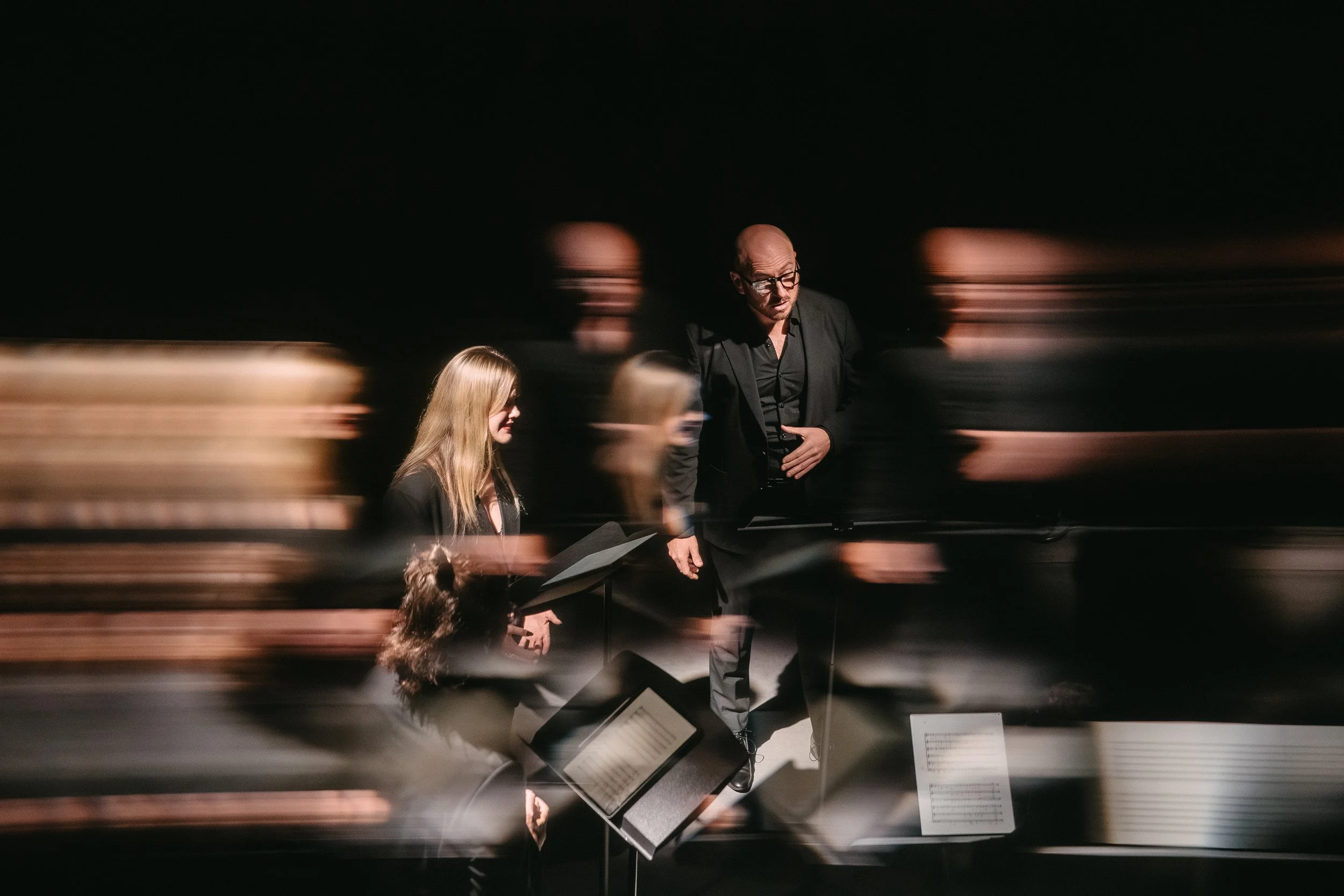
Images by Jordan Munn, courtesy of Phoenix Central Park.
DARKNESSES: ABOUT THE PROJECT
More than 400 years later, the music of Carlo Gesualdo still seems strikingly avant-garde. Composed during his final years, and in self-imposed isolation, Gesualdo’s Tenebrae Responsories are music of unmatched intensity. This is music at the end of an epoch; at once steeped in and a radically unsettling subversion of the traditions of the sixteenth century.
Translating literally to ‘darkness’, the plural form of ‘Tenebrae’ is fitting; it implies a multiplicity, all-encompassing shadows; a plunge into darknesses of both deeply personal grief and of universal sorrow.
In a three part series spanning 2025 - 2027, Luminescence journeys into the dark heart of the Renaissance, performing each of Gesualdo’s three Tenebrae Responsories in sequence. Each set of responsories contains nine motets, presented in sets of threes, and interspersed with Lamentations of Jeremiah.
In March 2027, Luminescence will perform the final instalment of this three-year series, the Responsories for Holy Saturday.
From September 2027 onwards, Luminescence will be available to perform festival presentations of the entire Gesualdo Responsories across three consecutive evenings.
Gesualdo Tenebrae II (Responsories for Good Friday): Tamquam ad latronem existis
Recorded live at Judith Neilson's Phoenix Central Park on Tuesday 17 March 2026.
Recording courtesy of Dr Judith Neilson AM and Phoenix Central Park. Recording Engineer: Michael Wickens; Recording Assistant: Nathan Moas; Mix Engineer: Jack Prest; Photography: Jordan Munns
ABOUT THE MUSIC
Carlo Gesualdo, Prince of Venosa, died in 1613 at the age of 47. By 17th century standards, he lived a long and fortunate life. He had prodigious musical talent, wealth, jurisdiction, and a powerful network, most notably on his mother's side. The famous Borromeo family supplied popes and saints for generations; his mother was the niece of Pope Pius IV, and his uncle Carlo Borromeo, a leading figure of the Counter-Reformation, was canonised in 1610. As the second son of a noble family, Gesualdo was destined for an ecclesiastical life. At age seven he was sent to Rome under the protection of his uncle Alfonso, then dean of the College of Cardinals. When his older brother died in 1584, Carlo became his father's successor, abandoning the Church and taking his first cousin Donna Maria d'Avalos as his wife.
The end of that marriage is now infamous. In October 1590, Gesualdo murdered Maria and her lover Fabrizio Carafa, Duke of Andria, discovering them 'in flagrante delicto di fragrante peccato' - caught in the act. A report by Neapolitan officials who inspected the apartment the following morning describes a macabre scene. Eyewitnesses told of Gesualdo entering with three men, shouting 'Kill that scoundrel, along with this Harlot! Shall a Gesualdo be made a cuckold?'. The crime of adultery was then considered far graver than the killing, and his status as a prince absolved him from criminal prosecution, his acts dismissed as a 'crime of passion'. Many gory stories circulated about Gesualdo thereafter. While some were unfounded, others are well documented: intimations with witches, the abuse of his second wife, and, according to one chronicler, 'ten or twelve young men', who Gesualdo kept in his employ for the sole purpose of beating him violently three times a day, during which he was ‘wont to smile joyfully.’ He saw out his final days in total isolation, tormented by grief and guilt.
A master of his craft, Gesualdo produced six books of highly charged erotic madrigals, each more audacious than the last, and then and a collection of Responsories for Holy Week. These works were conceived for the virtuosic sorts of singers he had encountered in Ferrara (and kept in his employ), but were experienced for an audience of one. In some respects these works were already a monument of the past. While his contemporaries embraced instrumental accompaniment and the theatrical potential of solo singing, Gesualdo retreated into polyphony, that hard-won craft of balancing independent vocal lines through refined counterpoint. Heeding nothing of the budding baroque forms, Gesualdo pushed polyphony to near breaking point, taking his own idiosyncratic musical language to its extreme. His harmonies move in unexpected directions. His vocal lines are asymmetrically drawn. Any suggestion of pattern is immediately denied, while subtle chromatic shifts and wildly imaginative word painting are his primary expressive tools. In all these ways, his writing feels irrefutably modern. One might compare his work to the elongated features of a Pontormo painting or the psychedelic colourings of El Greco: classical balance makes way for restlessness, uncertainty, and ambiguity.
The Tenebrae Responsories are regarded as Gesualdo’s final works. Here, his radically unorthodox musical language is contained within the structures of liturgy. The Responsories are three sets of nine motets written for the services of Matins, held on the nights before Maundy Thursday, Good Friday, and Holy Saturday. Each service consists of three Nocturnes, each containing psalm recitations, biblical lessons, and responsories. During this vigil-like ritual, nine candles are progressively extinguished, eventually leaving the church in near-darkness.
Interspersed between the three Nocturns are readings from the Lamentations of Jeremiah. These chants belong to the Old Testament. They are a collection of poetic laments for the destruction of Jerusalem in 586 BCE. In the Jewish tradition the lamentations are read on Tisha B’Av, a day of fasting and mourning that commemorates the destruction of the First and Second Temples in Jerusalem, but they have become associated with remembrance rituals for a host of other calamities that have befallen the Jews since, from expulsions, to Medieval massacres, to the Holocaust. In the Catholic liturgy, these ancient expressions of grief are applied allegorically to Christ’s suffering and death.
Composed during a moment of massive change in Western music, Gesualdo's motets are steeped in sixteenth-century tradition, yet they also represent a radical subversion of those same traditions. The centrality of death and sacrifice in this work makes it tempting to read everything as the self-obsessed cry of a tortured soul. Of course, with a biography as gruesome as Gesualdo’s, it is impossible not to wonder whether the violence of the music and the violence of the man came from the same place. The nexus of high art and foul play helped make Gesualdo a cult figure in the 20th Century, and intrigues us still, but it doesn’t explain why this music seems to transcend all the boundaries of its time and place, and even of its liturgical context. Translating literally as 'darkness', the plural Tenebrae implies multiplicity: all-encompassing layers of shadow, both deeply personal and universal. The Tenebrae Responsories are a reckoning with sin, trauma, and transgression - of the passion story, of Gesualdo’s, and of our own.
Roland Peelman & AJ America